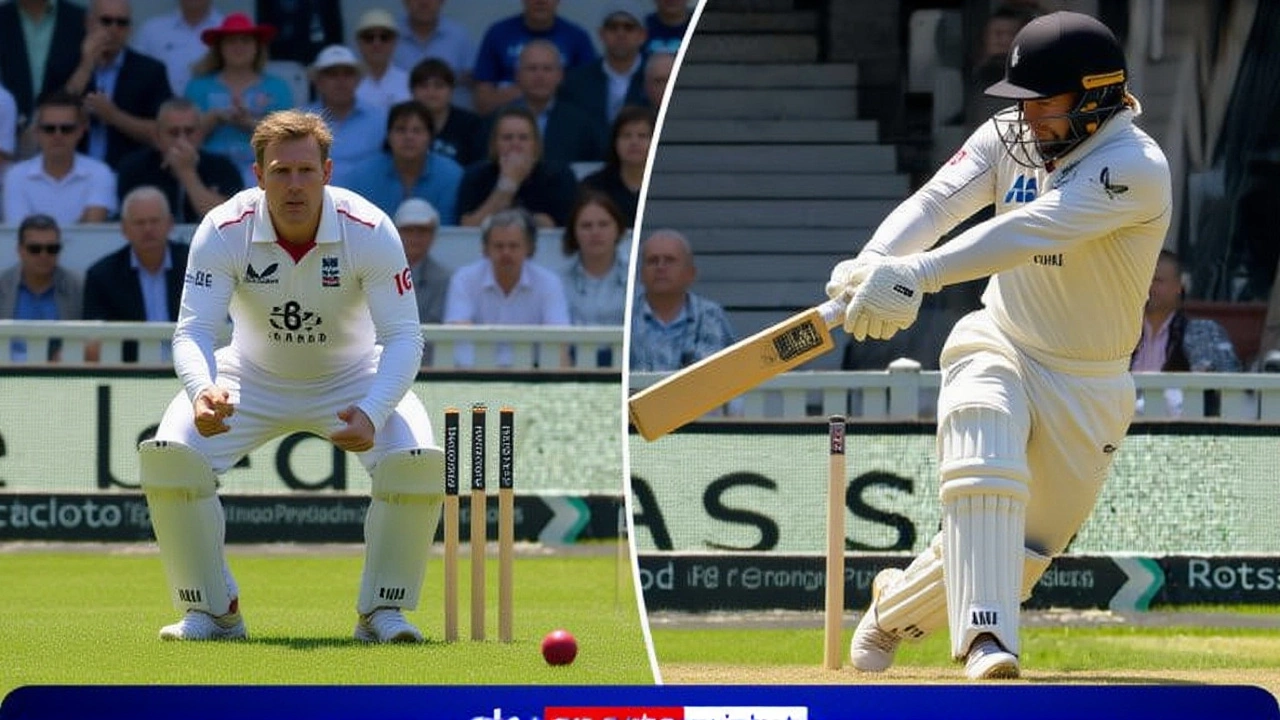
It’s the kind of moment that shifts the momentum of a Test match in an instant. On the second Test between England and New ZealandThe Oval, England bowler Matthew Fisher did exactly what his captain hoped for: he got the breakthrough. And it wasn’t just any wicket—it was Devon Conway, opening batsman for New Zealand.
The dismissal came on Wednesday, June 17, 2026, at approximately 12:58 UK time. Sky Sports captured the scene live as Conway departed, marking an early success for England on day one of this crucial series decider in London. For fans watching from home or sitting in the stands at Kennington, the significance was immediate. Removing Conway so early exposes New Zealand’s lower order, a vulnerability they’ve struggled to manage against English pace throughout recent tours.
A Breakthrough That Matters
Here’s the thing about opening partnerships in Test cricket: when they break, pressure mounts. Conway is no ordinary opener. He’s a player who has produced mammoth efforts—like his historic 178 not out in a previous landmark innings—and knows how to dig in when things get tough. But today, Matthew Fisher had other plans.
Fisher’s delivery didn’t just take the wicket; it signaled intent. Early breakthroughs are psychological weapons. They tell the batting side, “We’re going to come after you.” And given New Zealand’s recent struggles—losing the first Test at Lord’s by 115 runs in a low-scoring affair—that message landed hard.
Conway’s departure leaves New Zealand fighting from behind again. In the first Test, he scored 1 and 41. His 41-run knock was described by analysts as “resistance” that, once broken, left the tail exposed. Sound familiar? It should. This pattern repeats itself whenever Conway falls early against England.
The Human Element Behind the Stats
But wait—there’s more to this story than just runs and wickets. Before stepping onto the pitch at The Oval, Conway undertook a grueling 23,000-mile round trip. Why? To be there for the birth of his second child with his wife Kim in Wellington.
New Zealand Cricket issued an official statement confirming Conway’s brief return home: “BLACKCAPS batter Devon Conway has briefly returned home to New Zealand to welcome the birth of his second child.” He spent time with family before flying back to London ahead of this Test. Imagine packing up your life, crossing half the globe, and then walking out to bat under floodlights (or daylight, depending on the hour) knowing everyone expects you to perform.
That emotional weight doesn’t show up in scorecards—but it affects players. Fatigue, jet lag, mental load—they all play a role. Did those factors influence Conway’s performance today? We can’t say for sure. But it’s worth noting.

Historical Context: A Player Defined by Resilience
Let’s step back a bit. Devon Philip Conway, born July 8, 1991, isn’t someone who crumbles easily. Over his career, he’s shown flashes of brilliance mixed with periods of struggle. Remember when he missed the third Test versus England in Hamilton because he was awaiting the arrival of his first child? Back then, he’d managed only 21 runs across four innings. Team officials called him “out-of-form,” and uncapped all-rounder Mark Chapman took his place.
Yet Conway bounced back. Not always consistently, but enough to keep his spot. His 178 not out remains a testament to his ability to produce when it counts most. Even moments like being dropped on 24 by Harry Brook during another England-New Zealand clash highlight how close calls shape careers.
So why does this matter now? Because every time Conway gets out early, New Zealand pays the price. Their middle order lacks depth compared to England’s firepower. Take away their anchor, and suddenly the game tilts.
What Experts Are Saying
Cricket analysts have been quick to point out the implications of Fisher’s strike. One commentator noted, “Getting Conway cheaply changes everything. If England builds on this, they could dominate within two days.” Another added, “Fisher’s line and length were spot-on. He exploited the seam movement beautifully.”
These insights aren’t just hype—they reflect real tactical advantages. England’s bowling attack thrives on creating doubt among batters. By removing key figures early, they force mistakes down the order. And Conway, despite his experience, couldn’t avoid the trap set by Fisher.

Looking Ahead: What’s Next?
As day one concludes, questions linger. Can New Zealand recover? Will Conway’s absence disrupt their strategy further? Or will someone else step up to fill the void?
For England, the focus shifts to maintaining pressure. Fisher’s breakthrough gives them hope, but Tests are won over five days, not one session. Still, starting strong sets a tone. If England continues to exploit weaknesses in New Zealand’s lineup, victory might be closer than anyone realizes.
Meanwhile, Conway faces a personal challenge too. Balancing fatherhood with international duty isn’t easy. Yet here he is, ready to face whatever comes next. Whether that means redemption or resignation depends on tomorrow’s play.
Frequently Asked Questions
Who dismissed Devon Conway in the second Test at The Oval?
Matthew Fisher, an England bowler, took Conway’s wicket early on day one of the second Test. The dismissal occurred around 12:58 UK time on June 17, 2026, providing England with a significant breakthrough against New Zealand.
Why did Devon Conway travel such a long distance before the match?
Conway made a 23,000-mile round trip from England to Wellington, New Zealand, to celebrate the birth of his second child with his wife Kim. After spending time with his family, he flew back to London to rejoin the squad for the second Test at The Oval.
How does Conway’s early dismissal impact New Zealand’s chances?
Losing Conway early puts immense pressure on New Zealand’s lower-order batters, who often struggle against English pace. Historically, when Conway falls quickly, New Zealand finds itself fighting a losing battle due to lack of depth in their batting lineup.
What was Conway’s performance in the first Test at Lord’s?
In the first Test at Lord’s, Conway scored 1 run in one innings and 41 in the other. Despite his efforts, New Zealand lost by 115 runs in a low-scoring match. Analysts highlighted his 41-run effort as crucial resistance until his eventual dismissal.
Has Conway faced similar challenges balancing family and cricket?
Yes, Conway previously missed the third Test versus England in Hamilton to await the birth of his first child. At that time, he was struggling with form, having scored only 21 runs across four innings. Uncapped all-rounder Mark Chapman replaced him in the squad.